What Is Sofubi? Soft Vinyl Figures, Kaiju Origins, and How to Collect (2026)

So what is sofubi? Sofubi are hollow, hand-painted soft vinyl figures that started with Japan's 1960s monster boom and are now one of the most collectible corners of the toy world. This guide answers what sofubi is, how the figures are made, how they differ from a standard PVC scale figure, and how to start a collection in 2026.
If you have ever seen a bright, slightly squishy Godzilla or Ultraman figure at a Japanese hobby shop and wondered why it felt so light, that is sofubi.
- What it means: “sofubi” (ソフビ) is short for the Japanese words “soft vinyl” (ソフトビニール).
- Material: soft PVC (polyvinyl chloride), so the figure is hollow, lightweight, and slightly flexible.
- How it is made: liquid vinyl is slush-cast in a metal mold, then parts are assembled and hand-painted.
- Where it started: Marusan released kaiju sofubi in 1966 alongside the Ultra Q and Ultraman tokusatsu boom.
- Today: a mix of vintage kaiju toys and limited indie “art toy” sofubi made by named artists.
What is sofubi?
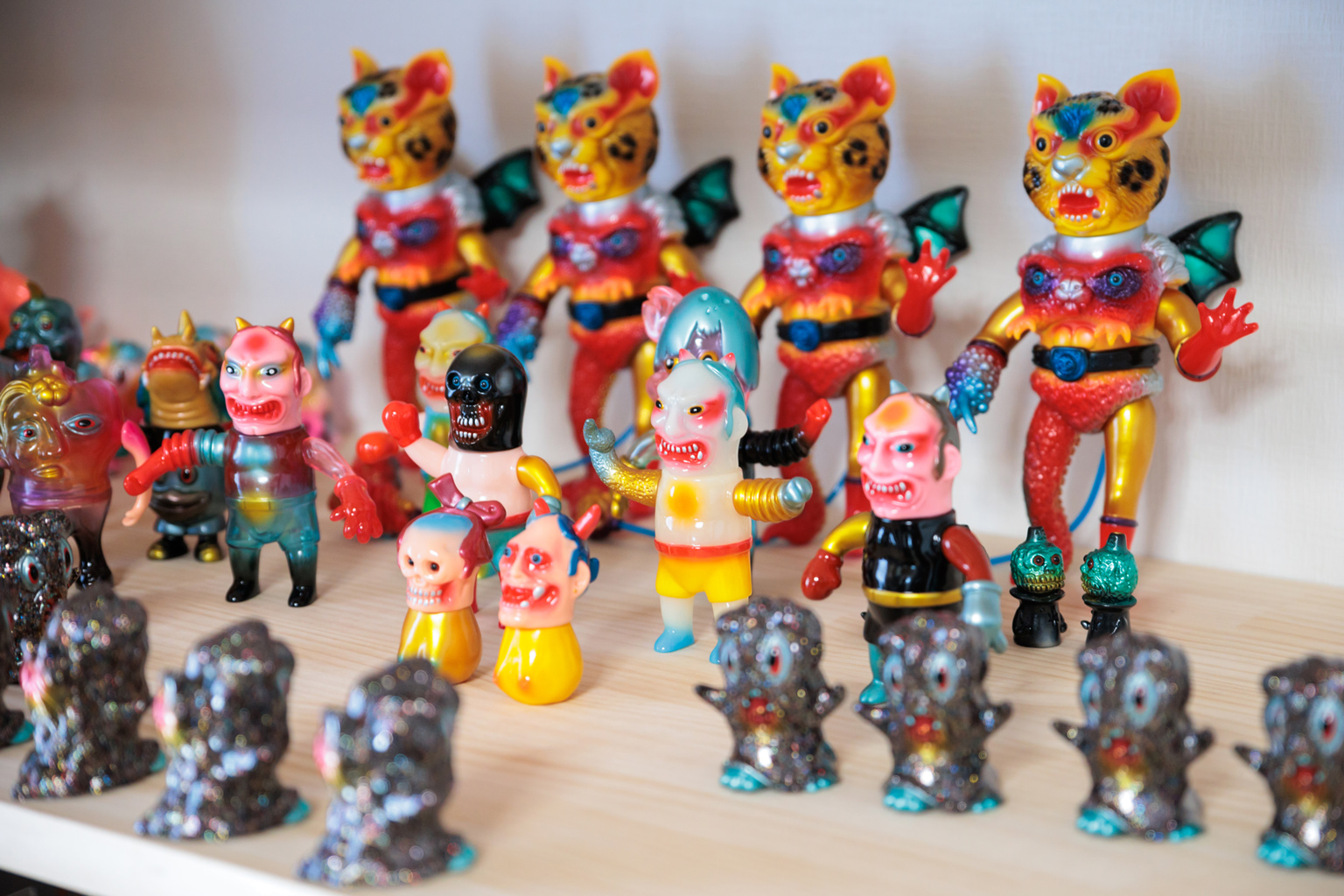
Sofubi is a Japanese toy category made from soft vinyl (soft PVC) rather than the rigid plastic used for most modern figures. The name is simply the contraction of “soft vinyl,” and collectors use it for everything from 1960s monster toys to today's boutique art figures.
Two traits define the format. The figures are hollow and light because the vinyl is cast as a thin shell, and they are usually finished by hand, which is why paint and color vary slightly from piece to piece.
How are sofubi figures made?
Sofubi is produced by slush casting (also called rotational molding), a slow, largely hand-run process that is very different from the mass-produced PVC statues you see from Bandai or Good Smile Company. The core steps look like this:
- Sculpt: an artist sculpts a prototype, traditionally in clay or wax.
- Mold: the prototype is used to make a metal mold. In the traditional Japanese method a wax master is electroplated with copper, then the wax is melted out, leaving a hollow metal cavity.
- Cast: liquid PVC is poured into the heated mold, which is spun so the vinyl coats the inside; base pigment is mixed in at this stage, and staged colors create marbled effects.
- Cool and pull: the mold is cooled and the hollow vinyl part is pulled out.
- Assemble and paint: figures are cast in separate parts, then joined and hand-painted.
Because so much of this is done by hand, a single artisan can only make a limited number per run. That labor is the reason sofubi is scarce and, often, expensive. For a broader look at how this compares with cast-resin production, see our guide to resin garage kits.
Where sofubi came from: the 1960s kaiju boom
Soft vinyl toys grew out of Japan's post-war switch away from flammable celluloid, but sofubi as collectors know it began with monsters. In 1966, Tokyo maker Marusan Shoten released soft vinyl kaiju figures tied to the special-effects TV show Ultra Q, and the format exploded alongside Godzilla, Ultraman, and Kamen Rider.
Makers such as Marusan and Bullmark defined the golden era of bright, hand-cast rubber monsters. The kaiju craze cooled in the mid-1970s as plastic and die-cast toys took over, and sofubi's popularity faded with it.
That heritage is still the heart of the hobby. Akibato ships Godzilla and kaiju collectibles from Japan if the monster side of sofubi is what pulled you in.
The 1990s revival: designer and art sofubi
Sofubi came back in the 1980s as nostalgic adults began collecting vintage pieces, prompting Marusan to issue reproductions. The bigger shift came in the 1990s, when Ura-Harajuku street-fashion brands (Bounty Hunter among them) reinvented sofubi as limited “art toys.”
Medicom Toy, founded in 1996, helped push designer vinyl worldwide and later launched its blind-box Vinyl Artist Gacha line in 2014. From the 2000s, indie sofubi absorbed influences from US West Coast street art and Hong Kong's designer-toy scene.
Today the indie side runs on named artists producing tiny batches, such as Izumonster, Konatsu, Teresa Chiba, and Kaori Hinata. Scarcity is deliberate. As Tokyo Weekender put it, “If you can buy them anywhere, they don't want it anymore.”
Sofubi vs other anime figures: 4 quick differences
Sofubi is a material and a process, not a scale, so it does not slot neatly next to a 1/7 statue. Here is how it compares with the formats most collectors already know:
- Sofubi vs PVC scale figure: sofubi is soft, hollow vinyl and usually stylized; a scale figure is rigid PVC/ABS built for realistic detail. See scale figure sizes in cm.
- Sofubi vs resin garage kit: both can be artist-driven and limited, but garage kits are hard resin, often sold unpainted and unassembled.
- Sofubi vs prize/trading figure: prize and blind-box figures are mass-produced in rigid PVC; sofubi runs are small and hand-finished.
- Sofubi vs action figure: most classic sofubi has limited articulation (often just head and arms), so it is closer to a statue than a poseable action figure.
For the full landscape, our overview of types of anime figures maps where sofubi sits.
How to start collecting sofubi in 2026
Sofubi rewards patience more than budget. Because runs are small, the hard part is usually finding a piece, not affording your first one. A practical way in:
- Pick a lane: vintage kaiju (Godzilla, Ultraman) or modern indie art toys. They trade in different places and price bands.
- Buy from makers directly: indie sofubi often sells through artist lotteries and release drops, frequently announced on Instagram.
- Use hobby shops and events: Mandarake's Akihabara store is known for one of the world's largest sofubi selections; monster and art-toy shows are core release channels.
- Expect resale premiums: sought-after limited pieces routinely flip well above retail, so factor that into secondary-market buys.
Frequently asked questions
Is sofubi the same as a PVC scale figure?
No. Both use PVC, but sofubi is soft, hollow vinyl cast as a thin shell, while a scale figure is a rigid, detail-focused statue. Sofubi is defined by its soft-vinyl material and slush-cast process, not by a fixed scale.
Are sofubi figures poseable?
Usually only lightly. Classic sofubi tends to have a few rotating joints (commonly the head and arms) rather than full articulation, so it displays more like a stylized statue than an action figure.
Why are some sofubi so expensive?
Two reasons: labor and scarcity. Each figure is slush-cast and hand-painted in small runs, and popular indie artists cap production on purpose, which pushes limited releases to high resale prices.
How do I care for a sofubi figure?
Treat it like soft vinyl. Keep it out of direct sunlight and heat, which can warp the shell and fade hand-applied paint, and avoid stacking heavy objects on the hollow body. Handle painted areas gently, since paint can rub over time.
The takeaway
Sofubi is one of the most distinctive figure formats Japan produces, and knowing the basics makes it far easier to collect with confidence:
- Sofubi means “soft vinyl” and refers to hollow, hand-painted soft-PVC figures.
- It is slush-cast in metal molds, largely by hand, which limits how many exist.
- The format began with Marusan's 1966 kaiju toys and revived in the 1990s as designer art toys.
- It is a material and process, not a scale, so it sits apart from standard PVC statues.
- Start by choosing vintage kaiju or indie art toys, and buy from makers, shops, and events.
If a soft-vinyl Godzilla or a limited art toy is calling your name, you can browse Akibato's figures and have them shipped from Japan.