Is the Ichiban Kuji Last One Prize Worth It? How to Decide Which Prize to Chase

Every Ichiban Kuji reveal post tells you what the prizes are. Almost none of them tell you which one to actually chase. That gap is deliberate: shops want you to buy tickets, so they list Prize A through the Last One Prize and let you decide in the dark. This guide answers the question the reveal posts skip. The short version: the Last One Prize is worth chasing only when you can control the end of the box, the A, B and C figures are where most collectors should put their money, and for a lot of sets the smartest move is to skip the lottery entirely and buy the exact figure you want secondhand. Below is the full tier map, a resale-value reality check with real 2026 numbers, and a three-question framework for deciding where your budget goes.
What the Last One Prize actually is
The Last One Prize is a bonus figure awarded automatically to whoever draws the very final ticket in a box. It is not a tier you can request; it triggers on the last ticket, one per box, and it is usually a recolored or special-edition version of the headline A Prize.
- One per box. A box holds roughly 80 tickets, so a single storefront produces exactly one Last One Prize.
- Never sold at retail. Bandai does not sell it separately, so the only way to own one without drawing the final ticket is the aftermarket.
- Every ticket still wins. Ichiban Kuji has no blanks. Even if you never touch the Last One, the ticket you draw always returns something, from a keychain to a large figure.
If you want the mechanic explained from the ground up, we cover it in our Last One Prize explainer. This piece assumes you know how it works and focuses on whether it is worth your money.

How Ichiban Kuji prizes rank, A to Last One
Prizes run from Prize A down a lettered ladder to G or H, and the value drops sharply as you go. Here is what each band usually contains and whether it is worth targeting.
| Tier | What it usually is | Typical size | Chase or skip? |
|---|---|---|---|
| Prize A | The headline figure, most detailed sculpt in the set | ~20-25 cm | Chase (top target) |
| Prizes B-C | Secondary premium figures or premium plush | ~15-20 cm | Chase (best value) |
| Prizes D-H | Acrylic stands, rubber charms, glassware, mugs, towels | Small goods | Skip (filler) |
| Last One | Exclusive recolor or special version of Prize A | ~20-25 cm | Situational (see below) |
The pattern is consistent across sets: A, B and C are premium 15-25 cm figures with real sculpt and paint quality, and there are often only one or two of each in a full box. Everything from D downward is small merchandise that rarely holds value once a set's hype fades. If you are buying for display, your money belongs in the A-C band.
Where MASTERLISE fits
Premium sets from Bandai put their A-C figures in the MASTERLISE line, Bandai's higher-detail prize-figure tier. That is why a MASTERLISE A Prize can rival a boxed scale figure in presence. If you are weighing whether the premium tier justifies the extra chase, see MASTERLISE vs standard prize figures and our primer on what MASTERLISE actually is.
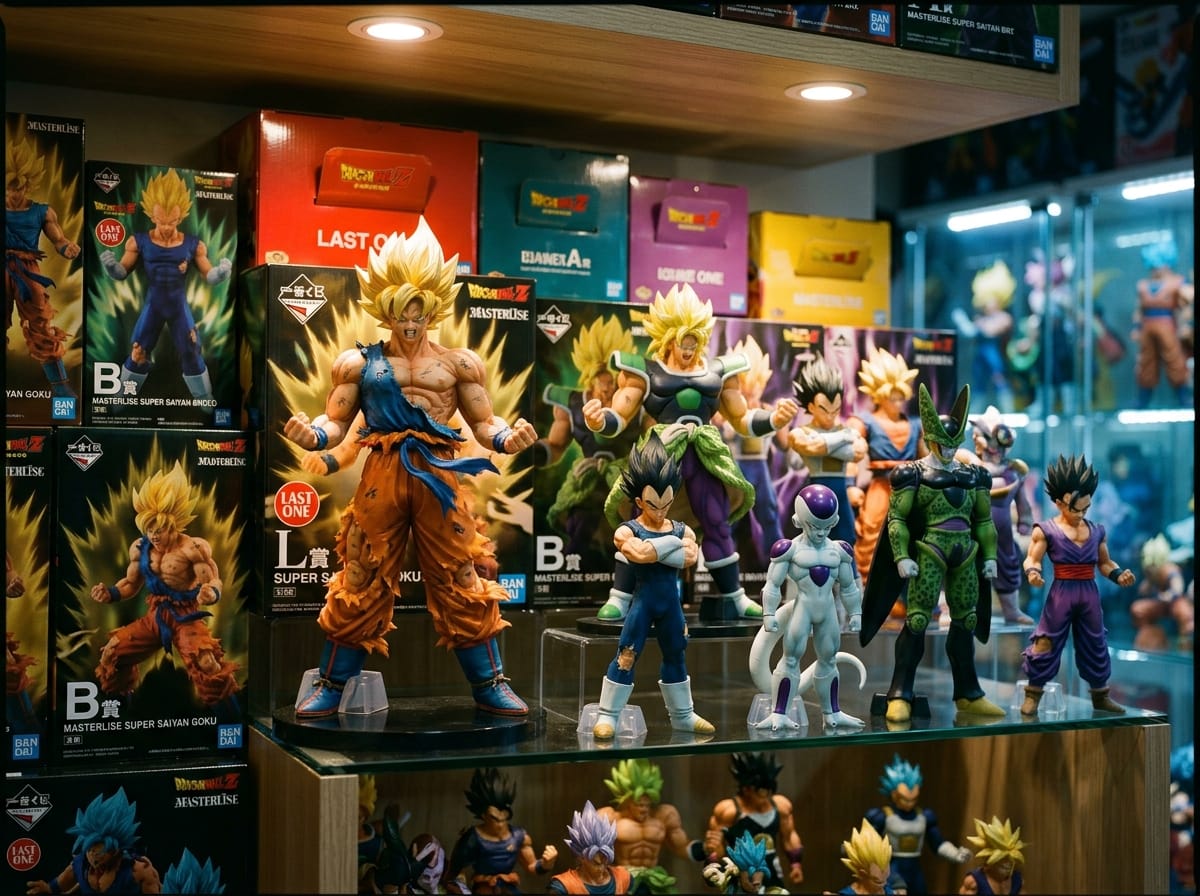
Is the Last One Prize worth chasing? The honest answer
It depends entirely on whether you can control the end of the box. The Last One is not random luck you can plan around by drawing one or two tickets; it goes to whoever takes the final ticket, full stop. That single fact splits collectors into two very different situations.
When the Last One IS worth it
- You can watch a physical store and buy out the tail. The reliable strategy is to monitor a shop's box, wait until only the last 10-20 tickets remain, then buy all of them to guarantee the final ticket. If the remaining tickets cost less than the Last One's resale value, the math works.
- The Last One is a genuinely different figure, not a minor recolor. Some Last One prizes are dramatic alternate versions that fans specifically want. When the exclusive is desirable in its own right, the premium is justified.
- You already wanted the A Prize. Because the Last One is usually an A Prize variant, chasing it often means you were going to draw heavily anyway.
When the Last One is NOT worth it
- You are buying online and cannot see how many tickets are left. Without visibility into the box, chasing the Last One is pure gambling, and you can burn far more than its value.
- You only want one specific figure. If the A Prize is the piece you love, target the A Prize directly. The Last One is a bonus, not a substitute.
- The recolor is minor. A slightly different paint job rarely justifies buying out a box tail.
What the resale numbers really say
The Last One does command a premium, typically double or triple the price of standard ranks on proxy and auction sites, because it is effectively a one-of-one per storefront. But the base figure it is built on is often affordable secondhand, which changes the calculation. A concrete 2026 example makes this clear.
The Evangelion 30th Anniversary Ichiban Kuji, which launched on February 6, 2026 at ¥790 per draw, headlined a 43 cm Unit-01 as Prize A. On the aftermarket the A Prize resold for roughly ¥5,400, while the exclusive Unit-01 Last One traded around ¥5,500 to ¥9,000 depending on condition. So the Last One premium over the A Prize ranged from almost nothing to well over 60 percent. That spread is the whole point: sometimes the exclusive is barely more than the standard figure, and sometimes it is a serious jump. Always check the actual resale gap before deciding it is worth a box-tail buyout.
Draw the tickets or buy the figure secondhand? The 3-question test
Before you spend anything, run these three questions. They decide whether you draw, hunt the box tail, or skip the lottery.
- 1. Do you want the whole set or one figure? If you only want one piece, do not draw at all. Buy that exact figure secondhand and pay a known price instead of an unknown number of ¥700-¥900 tickets.
- 2. Can you see the box? If yes and you want the Last One, the tail-buyout plan is viable. If no, treat the Last One as unreachable and target the A Prize by buying it finished.
- 3. What is the resale gap? Compare the finished A Prize price against the Last One price. A small gap means skip the chase and buy the A Prize; a large gap on a figure you love may justify the risk.
Recent draws price out around ¥790 to ¥850 per ticket, and a box runs about 80 tickets. That means a full box costs well over ¥60,000 before shipping, while the single figure you actually wanted often resells for a few thousand yen. For most collectors chasing one figure, secondhand wins outright.
4 mistakes collectors make chasing the Last One
- Drawing online for the Last One. You cannot control the final ticket in a blind online allocation. If a listing does not guarantee the last ticket, you are not chasing the Last One, you are gambling on filler.
- Ignoring the resale price of the base A Prize. If the A Prize is cheap secondhand, the Last One premium may not be worth a box-tail buyout.
- Overpaying for bootlegs. High-demand exclusives attract fakes. Learn to tell real from bootleg before you buy a pricey Last One on the aftermarket, using our authentic-vs-bootleg guide.
- Forgetting shipping and proxy fees. Bandai does not ship prizes overseas, so international buyers pay proxy and forwarding costs on top of the figure. Bake those into your gap math.
Frequently asked questions
Does every Ichiban Kuji ticket win a prize?
Yes. Ichiban Kuji has no blanks. Every ticket wins something, from a small keychain or acrylic stand up to a large figure. The uncertainty is which tier you get, not whether you win.
How much does one Ichiban Kuji draw cost?
A single draw usually runs ¥700 to ¥1,000 at Japanese retail. Recent 2026 sets have priced around ¥790 to ¥850 per ticket.
Can you buy the Last One Prize directly?
No. It is awarded only to the person who draws the final ticket in a box and is never sold at retail. The only way to own one otherwise is the secondhand market.
Is the A Prize or the Last One Prize better?
The A Prize is the reliable target: it is the headline figure and you can buy it finished secondhand at a known price. The Last One is a bonus recolor of that figure and is only worth chasing if you can control the box tail or the exclusive is a version you specifically want.
How do overseas fans get the Last One Prize?
Because Bandai does not ship prizes internationally, overseas collectors use a Japan-based proxy to buy a finished Last One from marketplaces like Mercari Japan or to draw in-store, then forward it abroad. Our walkthrough on how to buy Ichiban Kuji from overseas covers the full path.
The bottom line
- The Last One Prize is one-per-box, given to the last ticket drawn, and usually a recolor of Prize A.
- It is worth chasing mainly when you can watch a store and buy out the last 10-20 tickets, or when the exclusive is a figure you genuinely want.
- Prizes A, B and C are where most of the display value sits; D and below are filler.
- If you only want one figure, skip the draw and buy it secondhand at a known price.
- Always compare the finished A Prize price against the Last One price before deciding the premium is worth it.
Want the payoff without the box-tail gamble? Akibato ships finished Ichiban Kuji figures worldwide from Japan, so you can buy the exact prize you want instead of drawing for it. Browse in-stock lottery pieces in our One Piece collection and Demon Slayer collection, and if you love the format, our One Piece Skypiea Ichiban Kuji guide breaks down a full recent lineup, Golden Bell Last One and all.